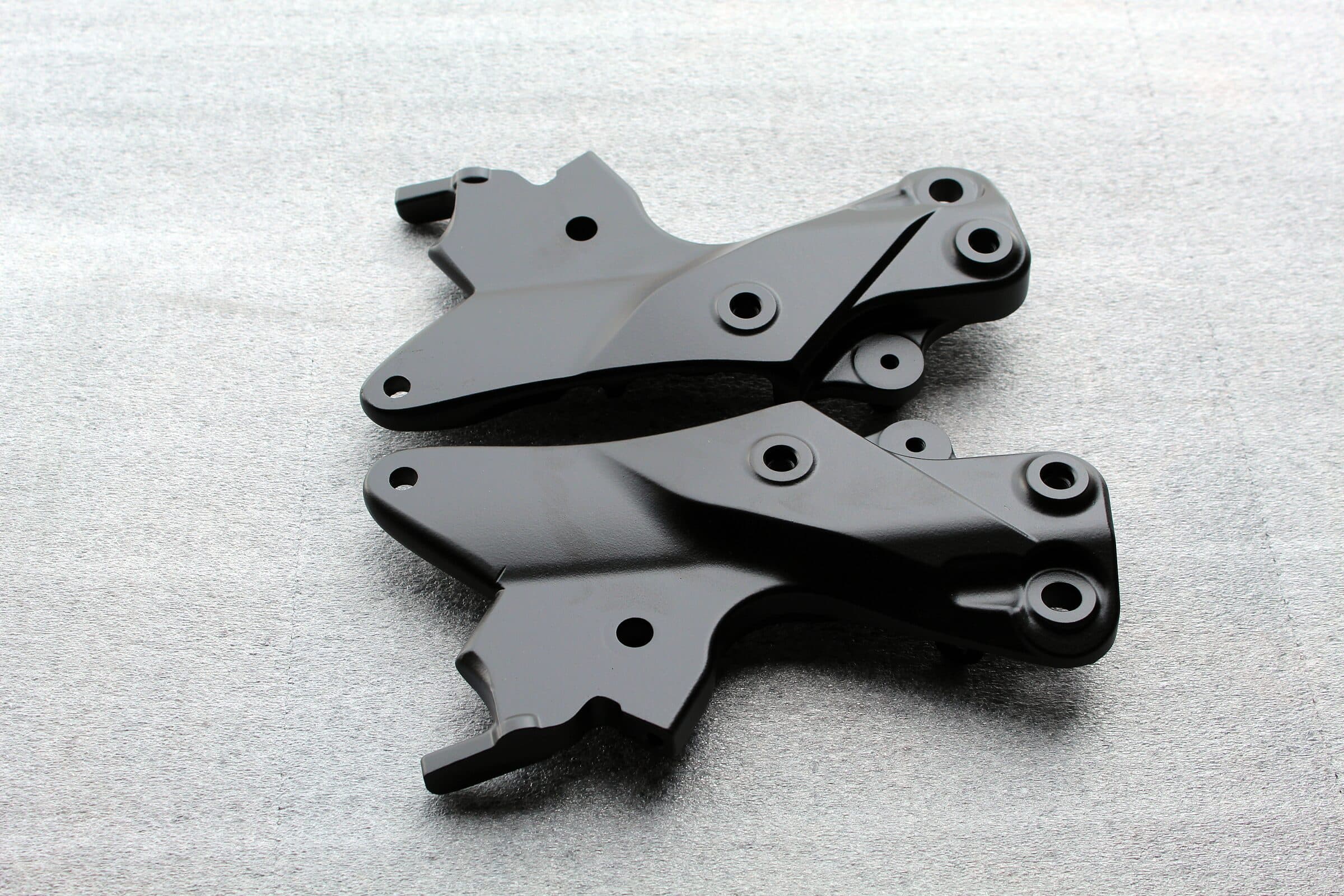
How powder coating works
Step 1 of 3
Strip and clean to bare metal
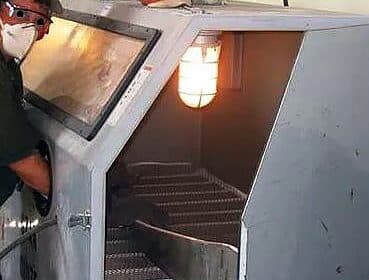
Oil, grease, rust, old paint and weld scale all have to come off before any powder goes on. Anything left behind shows up in the finish or lets the coating lift later.
Depending on the part, that means degreasing and chemical cleaning, then sandblasting or media blasting. Blasting also gives the surface a fine texture the powder can grip.
Step 2 of 3
Spray on the powder
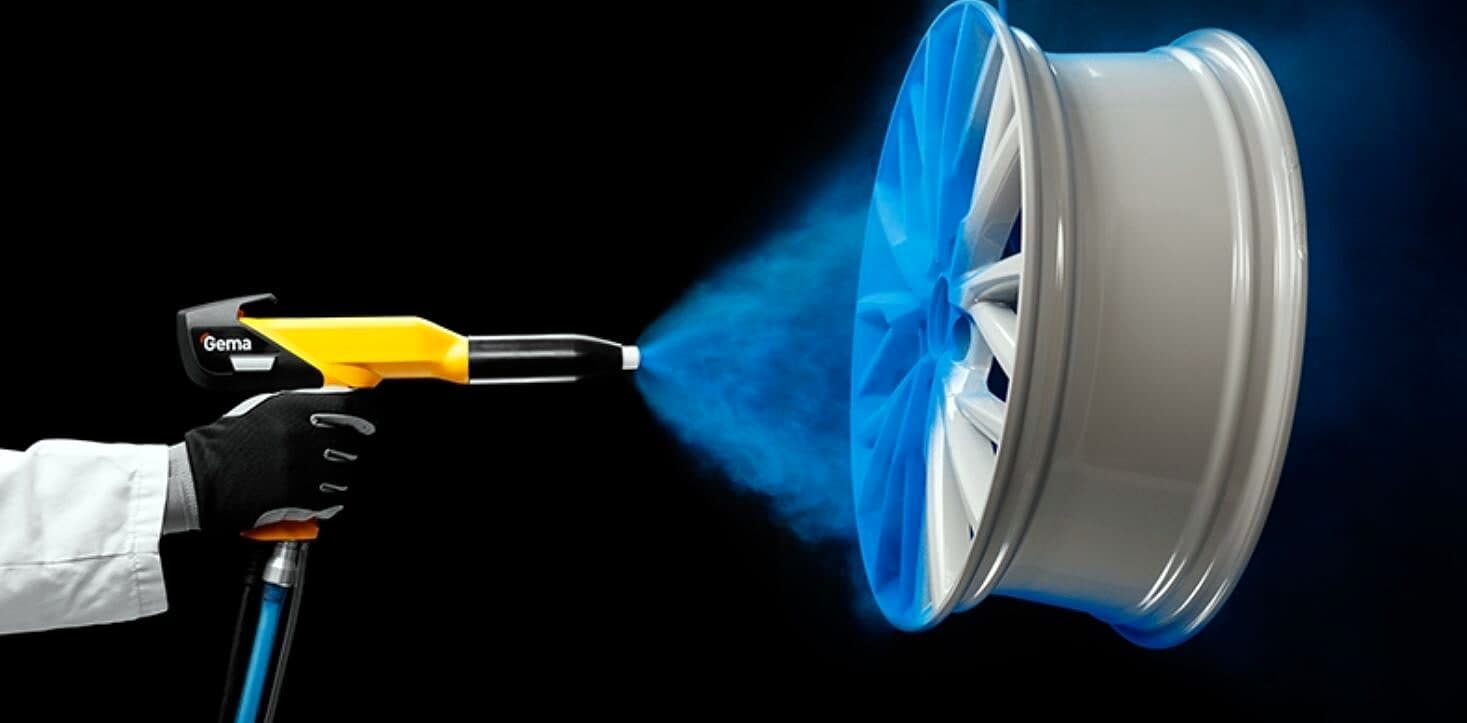
Powder coating is dry paint: finely ground color with no solvent. We apply it with an electrostatic spray gun that gives the powder a charge, so it clings to the grounded part and wraps evenly around edges and into corners.
Threads, bearing surfaces and anything that should stay bare are masked off first.
Step 3 of 3
Bake it in the oven
The coated part goes into the curing oven. The powder melts, flows out into a smooth, continuous film and then chemically cross-links as it cures.
That reaction is what makes the finish so hard. Once it has cured it won’t soften again when heated, and it holds up far better than a spray-can finish.
Good to know
Prep is most of the job
A part with old coating, rust or grease on it needs stripping first. Tell us what’s on it now when you ask for a quote.
Tougher than paint
The cured coating is comparable to a two-part automotive paint, applied without solvents and baked hard.
Mix it with other finishes
Polished lips on powder-coated wheels, or plated and coated parts on the same build. We do all of it in-house.
Get a quote on your part
Call the shop, or send a few photos and a short description and we’ll get back to you with a price.